
eCash Bitcoin
🛠️Info
Platform:
Network:
Airdrop task:
Requirements:
pc
eCash (Bitcoin fork)
Hard Fork / Snapshot
BTC in self-custody wallet
🧭 CryptoDroply Advice Rate

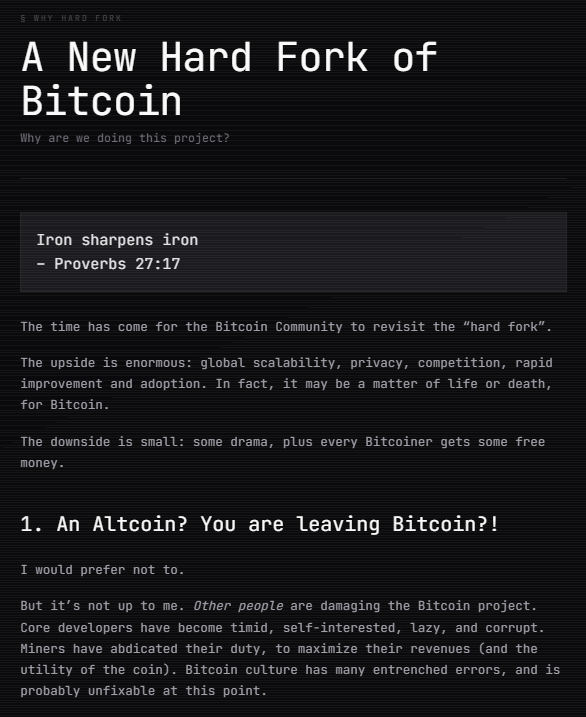
eCash is a Bitcoin hard fork announced by Paul Sztorc, founder of LayerTwo Labs and author of BIP 300/301. The fork is scheduled for August 2026: when it happens, every BTC balance gets copied to the new chain on a 1:1 basis. Your Bitcoin stays untouched — you simply end up with the same amount of eCash on a separate network, without doing anything other than holding BTC in self-custody before the snapshot.
The eCash chain keeps its Layer 1 nearly identical to Bitcoin while enabling Drivechains (BIP 300/301) natively — a model that lets separate sidechains handle privacy, smart contracts, DEXs, and prediction markets, all anchored to Bitcoin's SHA-256d mining. One controversy worth knowing upfront: before the fork, the team plans to reassign part of Satoshi Nakamoto's untouched coins to accredited investors as a funding mechanism. Sztorc has defended the decision publicly, but it remains divisive in the Bitcoin community.
eCash is a new chain derived directly from Bitcoin Core, built by Paul Sztorc — the same developer behind Drivechains (BIP 300/301). After years of pushing for BIP 300/301 as a Bitcoin soft fork without traction, Sztorc launched a separate chain where Drivechains work from block one. Think of it as a parallel version of Bitcoin where sidechains exist natively: one can behave like Ethereum, another can handle privacy, another can run a decentralized exchange — all using the same SHA-256d mining algorithm as Bitcoin.
The airdrop mechanic is straightforward: the fork copies every BTC balance to the new chain. If you hold 0.5 BTC in self-custody before the August 2026 snapshot, you automatically hold 0.5 eCash on the new network. No registration, no quest, no gas fees — just existing Bitcoin ownership at the right moment.
⚙️ How it works
Move your BTC to a self-custody wallet — a hardware wallet or any software wallet where you control the private keys. Coins held on exchanges depend on each platform's decision to support eCash; only confirmed ones will credit your balance.
Hold before the August 2026 snapshot. The exact block height will be announced by @LayerTwoLabs — follow their updates so you don't miss the window.
After the fork, import your existing Bitcoin private key or seed phrase into a compatible eCash wallet to access your mirrored coins. Official wallet details will be published at layertwolabs.com.
Optional — if you want to mine from day one: download the BitWindow test software at layertwolabs.com/download, get familiar with the setup, and prepare SHA-256d compatible hardware. Early blocks launch with a difficulty reset that makes them easier to mine before the chain finds its rhythm.
🎯 When to use it
If you already hold BTC in self-custody and want a free speculative position on a Bitcoin-derived chain without spending anything extra.
If you follow the Drivechain narrative and believe a Bitcoin with native sidechains has long-term value.
As a zero-effort airdrop: no bridging, no quests, no gas fees — the only action required is making sure your BTC is in self-custody before the snapshot date.
The main risk here is not technical but reputational: reassigning Satoshi's coins to investors before the fork is controversial and could affect how the market receives eCash at launch. Treat it as a free lottery ticket on your existing BTC — not as a reason to buy more Bitcoin just for the fork.
